The WashU Medicine fellowship in Urogynecology & Reconstructive Pelvic Surgery is an ACGME-accredited three-year program for individuals who have completed residency training in obstetrics and gynecology or urology at an ACGME-approved program. The ideal candidate for this program is strongly interested in pursuing a career in academic urogynecology, including excellence and leadership in education, research, and patient care.
The curriculum is designed to provide board training and experience in clinical care and research for women with pelvic floor disorders. Clinical rotations include in-patient and outpatient urogynecology, urology, gastroenterology, colorectal surgery, pelvic floor physical therapy, and geriatrics. Fellows experience the full breadth of urogynecology care. Fellows develop surgical expertise, which includes abdominal, vaginal, laparoscopi,c and robotic approaches to pelvic floor disorders
2026 Fellowship Virtual Interview Dates:
Applications Closed
Program
The primary goal of WashU and Barnes-Jewish Hospital URPS fellowship is to provide fellows with advanced training and experience in the clinical care of women with pelvic floor disorders and in the theoretical and practical aspects of basic science, translation, and clinic research.
The fellowship program consists of:
- 18 months of Urogynecology & Reconstructive Pelvic Surgery
- 2 months of female urology
- 1 month of colorectal surgery
- 2 weeks gastroenterology
- 2 weeks geriatrics
- 1 week of physical therapy
- 12 months of research
- Independent practice (throughout the fellowship)
The fellows’ clinical experience will allow them to provide high-quality care to women and consultative services to professional colleagues regarding pelvic floor disorders. The fellow research experience will enable them to contribute to the advancement of the field.
Urogynecology & Reconstructive Pelvic Surgery (18 months)
URPS rotations involve both four-week dedicated rotations on the outpatient and inpatient URPS services. Clinical sites for these rotations include WashU Medical Campus / Barnes-Jewish Hospital, as well as Missouri Baptist Medical Center, Barnes West County, and Progress West.
Female Urology (2 months)
The Urology rotation is a dedicated four-week rotation during which fellows work in both the outpatient and in-patient setting with female urology faculty and will be integrated into the urology inpatient team.
Colorectal Surgery (1 month)
The colorectal rotation is a dedicated four-week block during which fellows will rotate with faculty members of the Section of Colorectal Surgery in the Department of Surgery. The Colorectal rotation has both in-patient and outpatient components in which the urogynecology fellows will be exposed to the depth and breadth of patients seen and operated on by a busy referral CRS service, participate in the anal physiology lab, and participate in the COPE conference.
Gastroenterology (2 weeks)
The GI rotation occurs during a two-week outpatient urogynecology block. Fellows gain valuable experience on their gastroenterology rotation in evaluating and non-surgically managing women with irritable bowel syndrome, constipation, dyschezia, fecal incontinence, rectal prolapse, and other pelvic floor disorders presenting as posterior compartment conditions. The experience includes exposure to testing for anorectal and defecatory dysfunction including endoanal ultrasound, anal manometry, surface electromyography, single-fiber electromyography, pudendal nerve testing, and defecating proctography. Testing such as endoanal ultrasound, anal manometry, neurophysiologic testing and clinical consultation for selected patients is currently available in the Digestive Disorders Center at Barnes Jewish Hospital and Missouri Baptist Medical Center.
Geriatrics (2 weeks)
Geriatric Medicine is a two-week block rotation in the first year. This rotation is designed to expose trainees to numerous aspects of clinical care, education, and research methodology for older adults. The trainee will participate in outpatient comprehensive geriatric assessment. We hope that this rotation will provide a framework and foundation for the future care of the older adult patient.
Physical Therapy (1 week)
The PT rotation is shared with geriatrics in year one. Fellows will shadow the physical therapists to observe the evaluation and treatment of patients with pelvic floor disorders.
Research Training (12 months)
Fellows are encouraged to meet with faculty mentors prior to fellowship start. Twelve months of dedicated research time in 1 month blocks, four blocks per year. Research mentorship by faculty mentors part of the Department of Obstetrics and Gynecology and the wider WashU community. Departmental research resources are available.
Educational opportunities
Didactic training in clinical outcomes research methodology & a full range of female lower urinary tract disorders. The URPS fellows participate in the following educational conferences, seminars, and lectures weekly:
- Fellow didactics include:
- quality improvement seminars
- research in progress seminars
- clinical journal club
- landmark articles
- comprehensive Urogynecology topics
- Preoperative conference
- OB/GYN Grand Rounds
- Professional Development Series
Faculty
Urogynecology: Chiara Ghetti, MD, MSc; Jerry Lowder, MD, MSc, Sara Wood, MD, MHPE, Alec Szlachta-McGinn, MD, FACOG
Urology: Gregory P. Murphy, MD
Colorectal: Mathew Silviera, MD, MS
Gastroenterology: Charlene Prather, MD, MPH
Geriatrics: Ellen Binder, MD
Pelvic Floor PT: Tracy Spitznagle, PT, DPT, WCS
Research: Siobhan Sutcliffe, PhD, ScM, MHS
Contacts
Program Director: Sara C. Wood, MD, MHPE
Associate Program Director: Alec Szlachta-McGinn, MD, FACOG
Fellowship Program Coordinator:
Kelly Stockstill
About the Division of Urogynecology & Reconstructive Pelvic Surgery »
Our Current Fellows

Sarin Abiola Soyemi, MD
Clinical Fellow, Urogynecology and Reconstructive Pelvic Surgery
Began Fellowship 8.1.2024
Graduates 7.31.27

Christina Herbosa, MD
Clinical Fellow, Urogynecology and Reconstructive Pelvic Surgery
Began Fellowship: 8.1.25
Graduates: 7.31.28
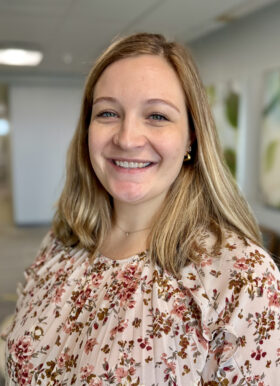
Hannah Wavering-Walters, MD
Clinical Fellow, Urogynecology and Reconstructive Pelvic Surgery
Began Fellowship 8.3.2026
Graduates 7.31.2029
Due to the nature of our fellowship structure and regulations regarding independent practice, we are unfortunately unable to support J-1 visas and new H-1 B visas. We will consider applicants with an existing H-1 B visa.
How to apply
All completed applications will be considered for an interview. The program coordinator will send interview invitations directly to candidates via ERAS. If you have any questions about the application process, please contact the program coordinator.
Apply to the program through ERAS.
Requirements for ERAS application consideration:
MyERAS Application
- Curriculum Vitae
- Medical School Transcript
- Medical Student Performance Evaluation (MSPE)
- Personal Statement (including a description of research experience and interests, career goals, and rationale for pursuing formal mentored training in clinical outcomes research for female lower urinary tract disorders)
- Photo
- USMLE Transcript
- One Letter of Recommendation from the Residency Director or Department Chair
- Two Letters of Recommendation
Incorporation of Standardized Letters of Evaluation (SLOE)
Starting with the 2026 interview season, each applicant will be required to submit a total of three Letters of Recommendation. Two of the letters will be templated Standardized Letters of Evaluation (SLOE):
- One SLOE from a Urogynecologist
- One SLOE from the current Residency Program Director. If an applicant completed residency 2 or more years ago, this SLOE should be completed by their current Chair or Division Head.
Program Signaling
Starting with the 2026 interview season, applicants may use signaling to express their interest in our fellowship program. The total number of signals per applicant is ten (10). This new feature will enable applicants to express their interest, helping program directors identify candidates who are best suited and most enthusiastic about their program.
Application Deadline:
Applications Closed
Interview Dates
Applications Closed